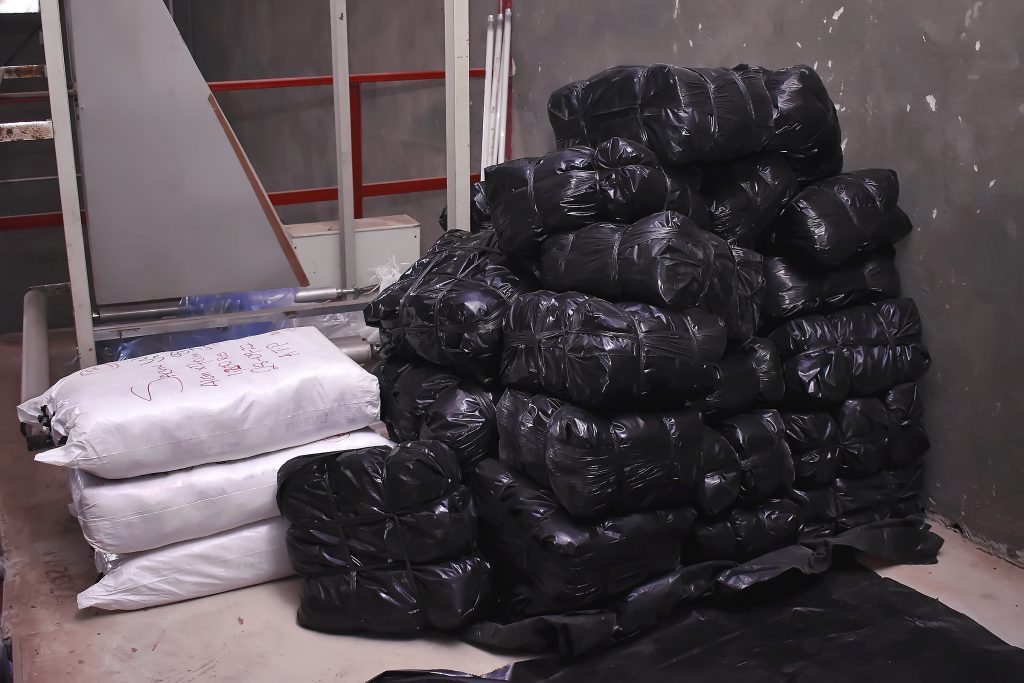
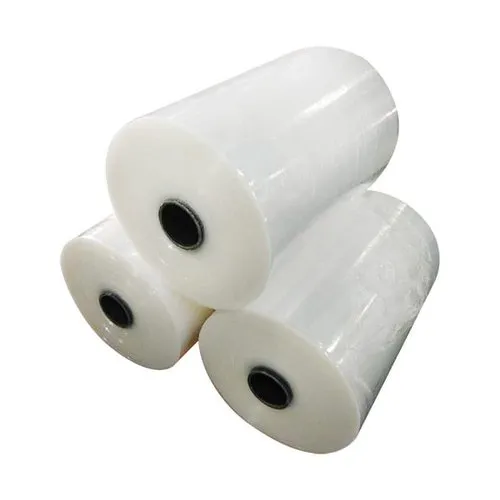
If you manufacture, farm, package, or build in Nigeria, you have already handled LLDPE, whether or not you knew its name. It is in the stretch wrap around your pallets, the liner inside your bulk bags, the mulch film on your farm, the tank in your yard, and the sheet holding water in your fish pond.
This guide explains what linear low-density polyethylene is, how it compares to HDPE and LDPE, which film grades work best for Nigerian packaging conditions, what a ton costs in today’s market, and where to source it reliably.
Quick answer for buyers: All Time Packaging Nigeria Ltd manufactures and supplies LLDPE films, sheets, liners, and granules from our production facility in Sango-Ota, serving Lagos, Ogun, and the rest of Nigeria. Call +234 708 271 7791 or email info@alltimepackaging.com.ng for a quote.
What Is LLDPE (Linear Low-Density Polyethylene)?
LLDPE is a polyethylene resin made by copolymerizing ethylene with a short alpha-olefin comonomer, usually butene-1, hexene, or octene. The result is a polymer chain that stays largely linear but carries many short side branches spaced evenly along its length.
That structure is the whole thing. Conventional low-density polyethylene (LDPE) is made under high pressure and ends up with long, tangled branches. LLDPE is made at lower pressure using catalysts, so the branches are short and uniform. Short, regular branching allows the chains to pack and slide against each other more efficiently, producing a film that is far tougher than LDPE at the same thickness.
Density typically falls between 0.915 and 0.925 g/cm³. Melt flow index for film grades typically ranges from 0.8 to 2.0 g/10 min.
Nigeria produces its own LLDPE. Indorama Eleme Petrochemicals in Port Harcourt runs a polyethylene plant using Sclairtech solution polymerization technology and produces butene-comonomer LLDPE alongside HDPE, supplying hundreds of plastic processors nationwide. The rest of local demand is met through imports from the Middle East, Asia, and Europe.
What Is Linear Low-Density Polyethylene Used For?
LLDPE goes into applications where toughness, stretch, and puncture resistance matter more than stiffness or clarity. The main uses in the Nigerian market:
Packaging films
- Stretch and cling film for pallet wrapping
- Heavy-duty sacks for cement, fertilizer, animal feed, and chemicals
- Bulk liners and drum liners
- Lamination films and multilayer film structures
- Shrink film for bundling bottles, sachets, and cartons
- Frozen food and produce bags
- Carrier bags and merchandise bags that need to resist tearing
Agriculture
- Mulch films for vegetable, pepper, and tomato production
- Greenhouse covers and nursery sheeting
- Pond and canal liners
- Silage and crop covers
- Drip irrigation tubing
Construction and civil works
- Damp-proof membranes under concrete slabs
- Geomembranes for landfills and containment ponds
- Concrete curing sheets
- Protective sheeting during finishing works
Rotational and injection molding
- Water storage tanks
- Chemical and effluent tanks
- Waste bins and refuse containers
- Toys, kegs, and playground equipment
- Container lids, closures, and housewares
Industrial and specialty
- Cable jacketing and insulation
- Wire coating
- Flexible tubing and hoses
- Sheets for thermoforming
What Are the Advantages of Using LLDPE Over HDPE?
HDPE and LLDPE are both polyethylene, but they behave differently because HDPE has almost no branching. The tightly packed HDPE chains produce a crystalline, stiff, dense material. LLDPE stays softer and more elastic. Here is where LLDPE wins.
1. Higher puncture and impact resistance
LLDPE absorbs impact by stretching instead of resisting rigidly. HDPE film is stiff, so a sharp corner or a dropped load tends to punch straight through it. For pallet wrap, bulk liners, and heavy-duty sacks carrying irregular or sharp-edged goods, LLDPE survives handling that splits HDPE.
2. Superior tear resistance in thin films
LLDPE film resists tear propagation. Once HDPE film starts a tear, the tear runs. This matters on Nigerian roads, in warehouse handling, and in open-market distribution where packaging is dragged, stacked, and reloaded repeatedly.
3. Excellent stretch and elongation
LLDPE elongates several hundred percent before breaking. HDPE does not stretch nearly as far. This makes LLDPE the only practical choice for stretch and cling wrap, where the film must be pulled tight around a pallet and hold tension without snapping back or splitting.
4. Better sealing performance
LLDPE seals at a lower temperature and produces stronger seals, including seals made through light contamination such as dust or powder residue. HDPE needs more heat and gives a more brittle seal. On high-speed form-fill-seal lines running powders, spices, or detergents, this difference shows up directly in your reject rate.
5. Higher environmental stress crack resistance
LLDPE resists cracking under sustained stress in the presence of chemicals and detergents. Standard HDPE grades crack sooner under the same conditions. For chemical drums liners, effluent containment, and detergent packaging, LLDPE lasts longer.
6. Better flexibility and conformability
LLDPE drapes and conforms. It wraps irregular shapes, lines curved pond walls, and follows uneven ground without stress points. HDPE resists being shaped and tends to bridge over contours instead of hugging them.
7. Downgauging without losing strength
Because LLDPE is tougher per micron, you can often reduce film thickness by 20 to 30 percent versus a comparable LDPE or HDPE structure and still meet your performance spec. Less resin per unit of packaging means lower cost per bag and less material weight to ship.
Where HDPE still wins
HDPE is the better choice when you need rigidity, higher tensile strength at yield, better moisture barrier, higher temperature resistance, and a stiff, crinkly film such as a supermarket singlet bag. Many products use both: an HDPE core layer for stiffness and barrier, with LLDPE skin layers for sealing and toughness.
Properties of LLDPE Compared to LDPE
LLDPE and LDPE sit at similar densities, which confuses a lot of buyers. They are not interchangeable. The difference in branching structure changes almost every performance property.
| Property | LLDPE | LDPE |
|---|---|---|
| Molecular structure | Linear chains, short uniform branches | Long, randomly branched chains |
| Production process | Low-pressure catalytic copolymerization | High-pressure free radical polymerization |
| Density | 0.915 to 0.925 g/cm³ | 0.910 to 0.925 g/cm³ |
| Tensile strength | Higher | Lower |
| Puncture resistance | Significantly higher | Moderate |
| Tear resistance | Higher | Lower |
| Elongation at break | Higher | Moderate |
| Optical clarity and gloss | Lower, hazier | Higher, glossier |
| Melt strength (bubble stability) | Lower | Higher |
| Processing ease | Needs more motor load and head pressure | Easier to process |
| Seal initiation temperature | Lower | Higher |
| Stress crack resistance | Excellent | Fair |
| Downgauging potential | Strong | Limited |
| Typical cost per ton | Comparable, sometimes slightly lower | Comparable, sometimes slightly higher |
Practical reading of this table: choose LDPE when appearance and processing ease lead the brief, for example a glossy printed shopping bag or a clear sachet film. Choose LLDPE when the film must survive handling, for example a 50 kg fertilizer sack or a pallet wrap. Choose a blend when you want both, which is what most Nigerian film producers actually run. A common approach is 70 to 80 percent LLDPE for strength with 20 to 30 percent LDPE added to improve bubble stability and gloss on the blown film line.
Best LLDPE Film Grades for Packaging in Nigeria
Grade selection comes down to three variables: melt flow index, density, and additive package. Here is how to match grade to application in Nigerian production conditions.
General purpose blown film
Look for a butene-comonomer LLDPE with MFI around 1.0 g/10 min and density near 0.919 g/cm³, supplied with slip and antiblock additives. This is the workhorse for carrier bags, liners, and general packaging film. Indorama’s NGL010FS falls into this category, engineered for high-strength blown film for multilayer and heavy-duty bags.
Lamination and printed film
Use a grade without slip and antiblock additives, because those additives migrate to the surface and interfere with ink and adhesive bonding. Indorama’s BFG00919 is the local reference point, a narrow molecular weight distribution LLDPE with no slip or antiblock, made for monolayer, multilayer, and lamination film.
Heavy-duty sacks and bulk liners
Move to a lower MFI grade, roughly 0.8 to 1.0 g/10 min, for higher melt strength and better dart impact. For cement, fertilizer, feed, and chemical packaging where the sack is thrown, stacked, and dropped, prioritize dart drop and puncture values over clarity.
Stretch and cling film
Specify a hexene or octene comonomer LLDPE where you can source it. Higher alpha-olefin comonomers give better cling, higher elongation, and better holding force than butene grades. This is one application where imported C6 or C8 material earns its premium.
Shrink film and bundling
A blend of LLDPE with LDPE, typically 60:40 to 70:30, gives the shrink response and bubble stability you need while retaining puncture resistance for bundling bottles, sachets, and cartons.
Agricultural mulch and greenhouse film
Insist on UV-stabilized LLDPE. Nigerian solar radiation degrades unstabilized polyethylene fast. A film without UV stabilizer that should give you two seasons will fail inside one. Ask your supplier to confirm the UV package and target service life.
Specification checklist before you order
- Melt flow index and tolerance
- Density
- Comonomer type: butene, hexene, or octene
- Slip and antiblock: present or absent
- UV stabilization, if the film goes outdoors
- Food contact compliance, if the film touches food
- Dart drop impact and Elmendorf tear values
- Batch consistency and certificate of analysis
All Time Packaging works through this checklist with clients before production. If you are unsure which grade fits your product, send us your application, your line specification, and your handling conditions, and we will recommend the resin and film structure.
LLDPE Pond Liner: What Nigerian Fish Farmers and Water Managers Should Know
LLDPE pond liner is the flexible geomembrane used to hold water in earthen ponds, tanks, reservoirs, canals, and containment basins. It is the standard solution for fish farms across Lagos, Ogun, Oyo, Delta, and the Middle Belt.
Why LLDPE for pond liners
LLDPE conforms to the base and walls of a pond without stressing at corners and slopes. HDPE liner is stiffer and stronger in tension, but it resists conformity and needs more careful subgrade preparation. On a typical Nigerian earthen fish pond with irregular contours and hand-dug slopes, LLDPE settles into the shape and stays in contact with the ground.
Its other advantages for this application:
- High elongation, so it absorbs ground settlement and shifting without splitting
- Good puncture resistance against stones and root fragments in the subgrade
- Flexibility in cold and hot conditions
- Easy field welding and repair
- Chemical resistance to fertilizers, fish waste, and pond treatments
Common thicknesses
| Thickness | Typical use |
|---|---|
| 300 to 500 microns | Small backyard ponds, short-term water storage, nursery ponds |
| 500 to 750 microns | Standard commercial catfish and tilapia ponds |
| 0.75 to 1.0 mm | Large commercial ponds, reservoirs, longer design life |
| 1.0 mm and above | Industrial containment, effluent basins, landfill applications |
Installation notes that protect your investment
- Clear the subgrade of stones, roots, and sharp debris, then compact it.
- Use a geotextile cushion layer where the subgrade is rocky.
- Anchor the liner in a perimeter trench, typically 300 to 500 mm deep, and backfill.
- Overlap seams generously and weld or seal them properly. Most pond liner failures start at seams.
- Leave slack. Do not install a liner drum-tight, because thermal expansion and contraction will pull it out of the anchor trench.
- Protect exposed edges from direct sunlight where possible, and specify UV-stabilized material.
All Time Packaging supplies LLDPE pond liner sheeting in custom widths, lengths, and thicknesses. Tell us your pond dimensions and we will calculate the sheet size and quantity you need.
Cost of LLDPE Per Ton in the Nigerian Market
LLDPE pricing in Nigeria is set by three things: the global resin benchmark, the naira exchange rate, and landed costs including duty, freight, port charges, and inland haulage. Because two of the three move weekly, treat every published figure as a snapshot.
Global benchmark
International LLDPE has traded in a broad band of roughly $900 to $1,200 per metric ton across major markets, with Middle East export prices at the lower end and European contract prices at the upper end. Middle East and Southeast Asian material sets the reference for most Nigerian imports.
Naira conversion
At an exchange rate of roughly ₦1,375 to ₦1,415 per US dollar in July 2026, that global band converts to approximately ₦1.24 million to ₦1.70 million per metric ton before any Nigerian landed costs.
Indicative Nigerian market pricing, July 2026
| Material | Indicative price per metric ton | Indicative price per 25 kg bag |
|---|---|---|
| Virgin LLDPE film grade | ₦1.6 million to ₦2.1 million | ₦40,000 to ₦52,500 |
| Virgin LLDPE rotomolding grade | ₦1.7 million to ₦2.2 million | ₦42,500 to ₦55,000 |
| Virgin LLDPE injection grade | ₦1.6 million to ₦2.0 million | ₦40,000 to ₦50,000 |
| Recycled or reprocessed LLDPE | ₦850,000 to ₦1.35 million | ₦21,000 to ₦34,000 |
These figures are indicative for planning purposes only. Actual pricing depends on grade, comonomer type, order volume, origin, payment terms, and the exchange rate on the day you buy.
What actually moves your price
- Order volume. Full-truck and container quantities price differently from 25 kg bag pickups. The gap between a one-ton order and a twenty-ton order is significant.
- Grade. Hexene and octene comonomer grades cost more than butene grades. Specialty and UV-stabilized grades carry a premium.
- Origin. Locally produced Indorama material avoids import duty, freight, and clearing time, but availability varies by grade.
- Exchange rate. Even locally produced resin prices track import parity, so naira movement affects everyone.
- Payment terms. Cash and prompt payment usually earn better pricing than credit terms.
- Crude oil and ethylene costs. Polyethylene is a petroleum derivative. Feedstock movement reaches resin prices within weeks.
How to buy well
Lock volume commitments when the naira is stable. Buy in full container or full truck quantities where cash flow allows. Standardize on fewer grades so you can consolidate orders. Build a relationship with one supplier who will hold stock for you rather than chasing the lowest spot price every month, because the cost of a production stoppage while you wait for resin usually exceeds whatever you saved per ton.
For a current, dated quote on LLDPE granules, film, sheets, or liners, contact All Time Packaging on +234 708 271 7791.
Where Can I Buy LLDPE Sheets in Nigeria?
All Time Packaging Nigeria Ltd.
We manufacture and supply LLDPE sheets, films, and liners from our production facility at No 38, Fidson Avenue, Opposite Fidson Pharma, Sango-Ota, and we deliver across Lagos, Ogun, and the rest of Nigeria.
What we supply in LLDPE sheeting:
- Pond and reservoir liners in custom sizes and thicknesses
- Damp-proof membranes and construction sheeting
- Agricultural mulch films and greenhouse covers
- Protective and covering sheets for industrial use
- Custom-width and custom-gauge sheeting produced to your specification
Why buyers choose us:
- Over 15 years of manufacturing plastic packaging in Nigeria
- Production capacity to handle both trial quantities and sustained bulk supply
- Custom sizing, gauge, color, and printing
- Sango-Ota location, positioned for fast delivery into Lagos and the southwest
- Existing supply relationships with leading FMCG groups, snack manufacturers, and industrial clients
- Direct manufacturer pricing, without a trading margin stacked on top
Request a quote: +234 708 271 7791 or info@alltimepackaging.com.ng. Open Monday to Saturday, 9:00 am to 6:00 pm.
Which Companies Manufacture and Supply LLDPE Films Locally in Lagos, Nigeria?
All Time Packaging Nigeria Ltd manufactures and supplies LLDPE films in Lagos and across Nigeria.
We are a plastic packaging manufacturer, not a reseller. Our facility in Sango-Ota produces flexible packaging for FMCG groups, snack manufacturers, industrial clients, and packaging distributors throughout Lagos and the surrounding states.
Our LLDPE film range covers:
- Stretch film and pallet wrap
- Shrink wrap and bundling film
- Heavy-duty sacks and bulk liners
- Mulch films for agriculture
- Lamination film for converters
- Shopping and carrier bags
- Printed packaging film with custom branding
- Multilayer film structures built to your specification
We also produce PP woven sacks, PVC pipes through our All Time Pipes division, and over 3,000 types of commercial poly bags.
If you are comparing LLDPE film suppliers in Lagos, the questions worth asking any of them are: Do you manufacture or trade? Can you show a certificate of analysis? What is your lead time on a repeat order? Can you hold buffer stock for me? Can you print and customize? We answer all five with a yes.
Contact: +234 708 271 7791 | info@alltimepackaging.com.ng | No 38, Fidson Avenue, Opposite Fidson Pharma, Sango-Ota, Ogun State.
LLDPE Granules for Plastic Molding: Sourcing in Nigeria
If you run rotational molding, injection molding, or blow molding, your resin supply decides your product quality. LLDPE granules are the standard feedstock for water tanks, chemical tanks, bins, kegs, toys, and a wide range of housewares.
Matching grade to molding process
Rotational molding. You need a medium-density LLDPE with good environmental stress crack resistance and impact strength. Rotomolding grades such as Indorama’s NGL045RG are formulated for water storage tanks, milk cans, and hollow articles, and can be compounded with carbon black for outdoor UV exposure. Rotomolding usually calls for material ground to powder, typically 35 mesh.
Injection molding. Higher MFI grades in the 20 to 50 g/10 min range flow into thin sections and complex tools. Indorama’s NGL250IG and NGL300IG sit in this range for lids, closures, housewares, and containers.
Blow molding. Mid-range MFI with good melt strength for parison stability.
What to demand from any granule supplier
- Consistent melt flow index batch to batch, because MFI drift changes your cycle time and wall thickness
- Certificate of analysis with each delivery
- Clean, dry, contamination-free material in sealed bags
- Correct UV package if the finished part lives outdoors
- Food-contact grade documentation where required
- Reliable lead times, because an idle molding machine costs more per day than any price saving on resin
Buy your LLDPE granules from All Time Packaging
All Time Packaging supplies LLDPE granules for plastic molding to manufacturers across Nigeria. We supply virgin and recycled grades, film grades, rotomolding grades, and injection grades, in 25 kg bags and in bulk.
Tell us your process, your part, and your monthly volume, and we will match the grade, quote the price, and set up a supply schedule that keeps your machines running.
Order LLDPE granules: +234 708 271 7791 | info@alltimepackaging.com.ng
Frequently Asked Questions About LLDPE
What does LLDPE stand for? LLDPE stands for linear low-density polyethylene, a polyethylene copolymer made by combining ethylene with a short alpha-olefin comonomer such as butene, hexene, or octene.
What are the advantages of using LLDPE over HDPE? LLDPE offers higher puncture and impact resistance, better tear resistance, far greater stretch and elongation, lower seal initiation temperature with stronger seals, better environmental stress crack resistance, and greater flexibility. HDPE remains stiffer with a better moisture barrier and higher temperature resistance.
Where can I buy LLDPE sheets in Nigeria? All Time Packaging Nigeria Ltd manufactures and supplies LLDPE sheets, films, and liners nationwide from our facility in Sango-Ota. Call +234 708 271 7791.
Which companies manufacture and supply LLDPE films in Lagos, Nigeria? All Time Packaging Nigeria Ltd manufactures LLDPE films in Lagos and Ogun State and supplies FMCG companies, snack manufacturers, agricultural businesses, and industrial clients across Nigeria.
How much does LLDPE cost per ton in Nigeria? Virgin LLDPE currently runs roughly ₦1.6 million to ₦2.1 million per metric ton depending on grade, volume, and exchange rate, with recycled material significantly lower. Contact All Time Packaging on +234 708 271 7791 for a current, dated quote.
Is LLDPE stronger than LDPE? Yes. LLDPE has higher tensile strength, better puncture resistance, and better tear resistance than LDPE. LDPE gives better clarity, gloss, and processing ease.
Is LLDPE food safe? Food-grade LLDPE resins are approved for direct food contact. Always confirm the specific grade carries food-contact documentation and request the certification from your supplier.
Is LLDPE recyclable? Yes. LLDPE carries resin identification code 4 and is widely recycled in Nigeria into liners, refuse sacks, and non-critical film applications.
Can LLDPE be used for pond liners? Yes. LLDPE is one of the most widely used pond liner materials because it conforms to irregular pond contours, tolerates ground settlement, and resists puncture. All Time Packaging supplies LLDPE pond liner in custom sizes.
What thickness of LLDPE pond liner do I need? Small ponds typically use 300 to 500 microns. Commercial catfish and tilapia ponds usually run 500 to 750 microns. Larger reservoirs and long-life installations use 0.75 mm and above.
Do you supply LLDPE granules for plastic molding? Yes. All Time Packaging supplies LLDPE granules in rotomolding, injection, and film grades, in 25 kg bags and in bulk quantities.
What is the minimum order quantity? It depends on the product and grade. We handle trial quantities as well as sustained bulk supply. Call +234 708 271 7791 to discuss your requirement.
Get Your LLDPE Quote From All Time Packaging
Whether you need LLDPE film for packaging, sheets for construction, liners for a fish pond, or granules for your molding line, All Time Packaging manufactures and supplies it.
Over 15 years in plastic packaging manufacturing in Nigeria. Direct manufacturer pricing. Custom specifications. Delivery across Lagos, Ogun, and nationwide.
All Time Packaging Nigeria Ltd No 38, Fidson Avenue, Opposite Fidson Pharma, Sango-Ota, Ogun State, Nigeria Phone: +234 708 271 7791 Email: info@alltimepackaging.com.ng Hours: Monday to Saturday, 9:00 am to 6:00 pm
Send us your specification today and get a quote within 24 hours.
Pricing figures in this article are indicative and reflect market conditions as at July 2026. Resin prices move with global benchmarks, crude oil, and the naira exchange rate. Contact us for a current quotation.