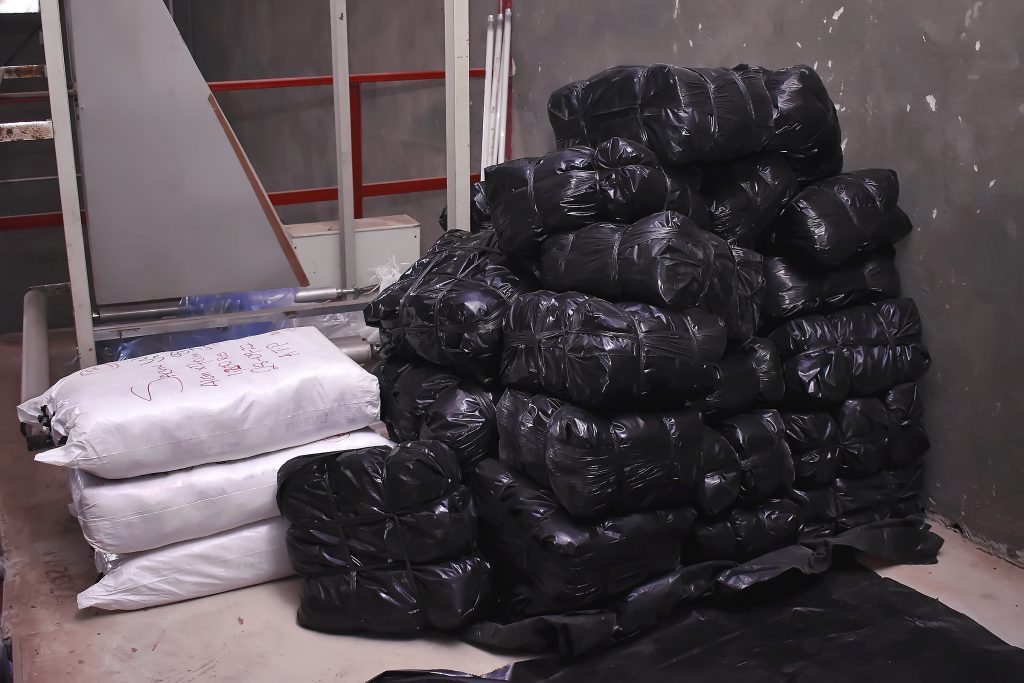
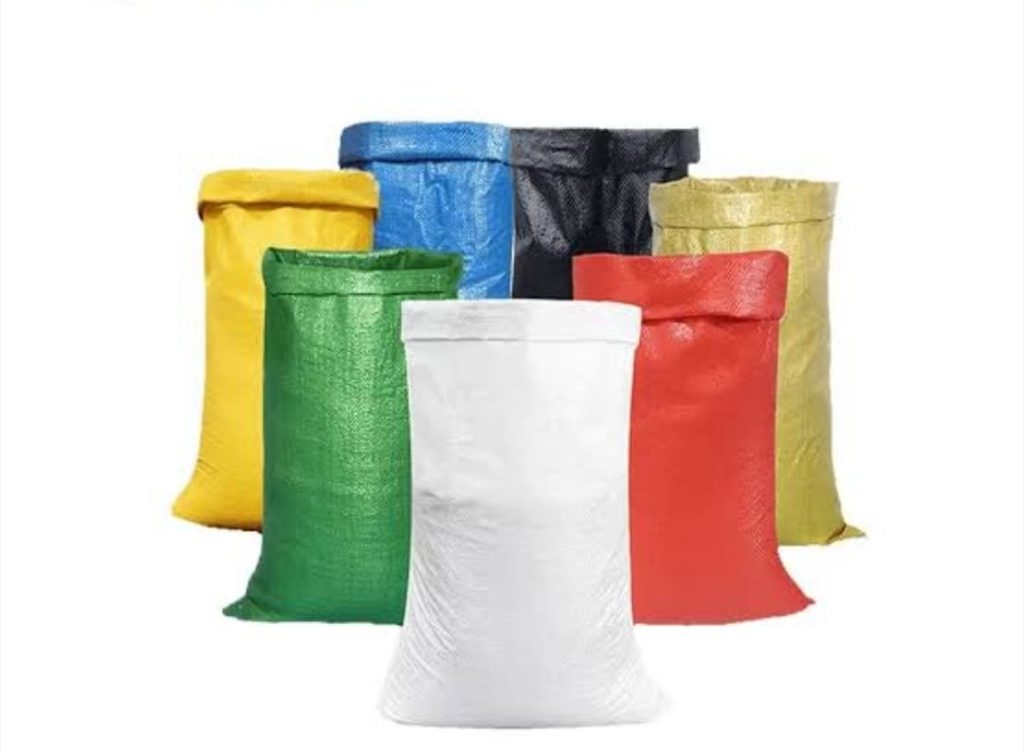
Walk through any market in Lagos, any cement depot in Ogun, any grain store in Kano, and you’ll see the same package repeated a million times: the polypropylene woven sack. It carries Nigeria’s cement, rice, maize, fertilizer, animal feed, sugar, salt, cocoa, sesame, and sand.
It is the most-used bulk package in the country, and it is also the one buyers understand least. Most people buy sacks on price per bag alone, then absorb the cost of burst bags, spilled product, rejected deliveries, and customer complaints without connecting those losses back to the specification they never checked.
This guide covers what PP woven sacks are, how they are made, the specifications that actually determine performance, the bag types available, current pricing in the Nigerian market, and how to buy without paying for failure later.
Quick answer for buyers: All Time Packaging Nigeria Ltd manufactures and supplies PP woven sacks in all sizes, GSM ratings, and configurations from our facility in Sango-Ota, serving Lagos, Ogun, and the rest of Nigeria. Call +234 708 271 7791 or email info@alltimepackaging.com.ng.
What Are PP Woven Sacks?
A PP woven sack is a bag made from polypropylene resin that has been extruded into thin flat tapes, stretched to orient the molecules, then woven on a circular or flat loom into a fabric, and finally cut and stitched into a bag.
The weaving is the point. Unlike a plastic film bag, which is a continuous sheet, a woven sack is a mesh of interlocking tapes running in two directions. That structure gives it a combination of properties no film can match at the same weight:
- Very high tensile strength for its weight
- Resistance to tearing, because a tear in one tape does not propagate across the others
- Breathability, so agricultural produce does not sweat and mold inside the bag
- Dimensional stability under load, so stacked bags hold their shape
- Low cost per unit of strength
Polypropylene itself adds chemical resistance, moisture resistance, resistance to insects and rodents compared with jute, and full recyclability.
The Specifications That Matters For Your Business
Most buyers ask for “50kg bags.” That is not a specification. Here is what you need to state when you request a quote.
1. GSM (grams per square meter)
GSM is fabric weight per unit area, and it is the single strongest predictor of bag performance. Higher GSM means more polypropylene, more strength, and higher cost.
| GSM range | Typical application |
|---|---|
| 45 to 55 GSM | Light produce, vegetables, short-cycle use, leno and mesh bags |
| 60 to 70 GSM | 25kg agricultural produce, light grains, feed |
| 70 to 90 GSM | Standard 50kg rice, maize, flour, sugar, feed |
| 90 to 110 GSM | Cement, fertilizer, chemicals, minerals, heavy duty |
| 110 to 140 GSM | Very heavy duty, abrasive contents, multi-trip use, sand |
When a supplier quotes you a suspiciously cheap 50kg bag, GSM is almost always where the material was removed. A 65 GSM bag sold as equivalent to a 90 GSM bag will fail under the same load, and you will not discover it until bags are bursting on a delivery truck.
2. Mesh count
Mesh count is the number of tapes per inch in the warp and weft directions, written as something like 10×10 or 12×12. Higher mesh means tighter weave, finer contents retained, and greater strength. For fine powders, you need a high mesh count plus lamination or a liner.
3. Denier
Denier measures tape thickness. Typical values run from 600 to 1,200 denier. Combined with mesh count, denier determines the fabric’s tensile strength.
4. Bag dimensions
Give width, length, and gusset if applicable, in centimeters or inches. Do not order by content weight alone, because 50kg of cement occupies a very different volume from 50kg of maize. Bulk density drives bag size.
5. Lamination
- Unlaminated: breathable, lower cost, suitable for grains, cocoa, and produce that needs air exchange
- Laminated: moisture barrier, better printability, required for cement, fertilizer, sugar, salt, and chemicals
6. UV stabilization
If your bags will sit in open yards, on construction sites, or at farm gates in Nigerian sun, specify UV stabilization. Unstabilized polypropylene loses a significant share of its tensile strength after a few months of direct exposure. This is the cheapest insurance in the entire specification.
7. Liner
An inner PE liner is needed for hygroscopic products, fine powders, and anything requiring a strong moisture barrier. Liners can be loose-inserted or heat-tacked.
8. Bottom and top configuration
Stitched, heat-cut, hemmed, block bottom, valve, or open mouth. This depends entirely on your filling equipment and your handling method.
Types of PP Woven Sacks for Bulk Packaging
Open mouth sacks
The standard workhorse. Bottom stitched, top left open for filling and then stitched, tied, or heat sealed after filling. Used for rice, maize, beans, feed, sugar, salt, and general agricultural produce. Lowest cost per bag, compatible with manual and semi-automatic filling.
Valve and block bottom bags
The bag has a square, flat bottom and a small valve opening at the top corner. Automated filling equipment inserts a spout through the valve, fills the bag, and the valve self-seals under content pressure. No stitching after filling.
This is the standard for cement and for high-speed powder filling. Block bottom bags stack squarely on pallets, which improves load stability and warehouse density.
BOPP laminated bags
A biaxially oriented polypropylene film carrying high-resolution printing is laminated onto the woven fabric. The result is a bag with full-color, photographic-quality graphics.
For branded rice, packaged feed, retail flour, and fertilizer sold in competitive markets, BOPP is what puts your product on the same visual level as an imported brand. It costs more per bag and pays for itself in shelf presence.
Gusseted bags
Side gussets expand to increase volume and let the bag stand more squarely when filled. Useful where you need more capacity from the same bag width.
Leno and mesh bags
Open-weave bags for produce that must breathe heavily: onions, yams, potatoes, oranges, firewood. Air circulation prevents rot and heat buildup.
FIBC bulk bags (Jumbo bags)
Flexible intermediate bulk containers carrying 500kg to 2,000kg, fitted with lifting loops for forklift and crane handling. Used for minerals, grains, chemicals, and industrial powders where handling one large unit beats handling forty small ones.
FIBCs are rated by safety factor. A 5:1 safety factor is standard for single-trip bags, 6:1 for multi-trip. Never buy an FIBC without a stated safe working load and safety factor.
Sand bags
Heavy GSM, UV-stabilized woven bags for construction, flood control, erosion barriers, and ballast.
Best PP Woven Sacks by Industry in Nigeria
Cement and building materials. Block bottom valve bags at 90 to 110 GSM, laminated, sized for automated packer lines. The bag must survive a drop from truck bed height without splitting.
Fertilizer. Laminated bags with a moisture barrier, often with an inner liner. Fertilizer is hygroscopic and corrosive, so both the barrier and the stitching thread specification matter.
Rice, maize, and grains. 50kg and 100kg open mouth sacks, 70 to 90 GSM, laminated or unlaminated depending on storage conditions. BOPP laminated for branded retail rice.
Animal feed. 25kg and 50kg bags, printed with the feed type and formulation. Poultry and fish feed producers usually want lamination for moisture protection during storage.
Flour, sugar, and salt. Food-grade PP, laminated, high mesh count to retain fine particles, often with an inner liner.
Cocoa, sesame, and export commodities. Breathability is critical, because sealed bags trap moisture and cause mold that fails export inspection. Unlaminated bags with the correct mesh count, and food-grade certification where the buyer demands it.
Chemicals and minerals. High GSM, laminated, with liners for fine powders. Specify chemical compatibility.
Construction sand and aggregates. Heavy GSM, UV stabilized, built for abrasion.
PP Woven Sacks Compared to Other Bulk Packaging
| Factor | PP woven sack | Jute bag | Paper sack | HDPE woven |
|---|---|---|---|---|
| Strength to weight | Very high | Moderate | Low | Very high |
| Moisture resistance | High, higher when laminated | Poor, absorbs moisture | Poor | High |
| Insect and rodent resistance | Good | Poor | Poor | Good |
| Breathability | Good when unlaminated | Very good | Moderate | Good |
| Print quality | Good, excellent with BOPP | Poor | Very good | Good |
| Reusability | Multiple trips | Limited | Single trip | Multiple trips |
| Recyclability | Fully recyclable | Biodegradable | Recyclable | Fully recyclable |
| Cost per bag | Low | Higher | Moderate | Low |
| Availability in Nigeria | Widely manufactured locally | Mostly imported | Limited | Widely available |
The practical conclusion for most Nigerian bulk applications is straightforward. PP woven sacks give the best combination of strength, protection, print capability, and cost. Jute retains a niche for specific export commodities where buyers specify natural fiber. Paper sacks struggle in Nigerian humidity and handling conditions.
How Much Do PP Woven Sacks Cost in Nigeria?
Sack pricing is driven by resin cost, which is driven by global polypropylene benchmarks, crude oil, and the naira exchange rate.
Market context
Polypropylene prices rose sharply through the first quarter of 2026 as Middle East disruption pushed up crude and feedstock costs, with CFR West African raffia prices gaining substantially over that period and North African raffia assessed at $1,290 per metric ton in mid-March. Prices then corrected as regional tensions eased in late May and crude retreated. By June 2026, PP was assessed at roughly $1.42 per kg in Northeast Asia, $1.45 per kg in North America, and $1.28 per kg in India, with markets described as flat into early July.
Converted at a naira rate of roughly ₦1,375 to ₦1,415 per dollar, raffia grade PP resin lands in Nigeria in the region of ₦1.8 million to ₦2.4 million per metric ton depending on origin, duty, clearing, and volume.
Indicative sack pricing, July 2026
| Sack type | Typical GSM | Indicative price per bag |
|---|---|---|
| 25kg plain woven, unlaminated | 55 to 65 | ₦180 to ₦300 |
| 50kg plain woven, unlaminated | 70 to 85 | ₦300 to ₦480 |
| 50kg laminated, single color print | 85 to 95 | ₦420 to ₦650 |
| 50kg BOPP laminated, full color | 85 to 100 | ₦600 to ₦950 |
| 50kg block bottom valve (cement) | 90 to 110 | ₦480 to ₦750 |
| 100kg woven sack | 90 to 110 | ₦600 to ₦900 |
| FIBC bulk bag, 500kg to 1,000kg | Heavy duty | ₦19,000 to ₦48,000 |
These figures are indicative for planning only. Actual pricing depends on GSM, dimensions, mesh count, lamination, number of print colors, liner requirement, UV package, order volume, and the exchange rate on the day of order.
What moves your price
- GSM. The largest single driver. A 20 GSM increase on a 50kg bag can add 20 percent or more to the unit cost.
- Order volume. Sack manufacturing has significant setup cost. Printing cylinders, color matching, and loom changeovers are amortized across the run. A 200,000 bag order prices very differently from a 10,000 bag order.
- Print colors. Each additional color adds cylinder cost and run complexity. BOPP lamination carries a step change in price.
- Lamination and liners. Each adds material and a production pass.
- Exchange rate and crude oil. Even locally produced resin tracks import parity pricing.
How to buy well
Standardize your bag specifications across product lines so you can consolidate volume into fewer, larger orders. Commit to annual volumes with a scheduled call-off rather than buying hand to mouth, because spot buying in a rising resin market is the most expensive way to purchase. Order printing cylinders once and reuse them. And run the arithmetic on failure cost: if a cheaper bag increases your burst rate by even one percent on a product worth ₦40,000 per bag of content, the saving disappears immediately.
For a current, dated quote on PP woven sacks, contact All Time Packaging on +234 708 271 7791.
Where to Buy PP Woven Sacks in Nigeria
All Time Packaging Nigeria Ltd.
We manufacture and supply PP woven sacks from our production facility at No 38, Fidson Avenue, Opposite Fidson Pharma, Sango-Ota, Ogun State, and we deliver across Lagos, Ogun, and the rest of Nigeria.
Our PP woven sack range:
- Open mouth sacks in 25kg, 50kg, 100kg, and custom sizes
- Block bottom valve bags for cement and automated powder filling
- BOPP laminated bags with full-color branded printing
- Laminated and unlaminated woven bags
- Gusseted bags
- Leno and mesh bags for produce
- UV-stabilized bags for outdoor storage
- Bags with inner PE liners
- Sand bags and heavy-duty industrial sacks
Our PP sacks are woven from high-quality polypropylene, UV-stabilized on request, and also moisture-resistant. We engineered them for strength and breathability across grains, fertilizers, powders, chemicals, cement, and other bulk goods. They are also recyclable and fully customizable in size, GSM, color, and print. You can contact us to get yours today
Why buyers choose us:
- Over 15 years of manufacturing plastic packaging in Nigeria
- Direct manufacturer pricing, without a trading margin stacked on top
- Custom specifications on GSM, dimensions, lamination, printing, and liners
- Capacity for both trial runs and sustained bulk supply
- We deliver across Nigeria
- Sango-Ota location, positioned for faster delivery into Lagos and the southwest.
- Existing supply relationships with leading FMCG groups, snack manufacturers, and industrial clients
- A full packaging range under one supplier, including flexible films, poly bags, and PVC pipes through our All Time Pipes division
All Time Packaging Nigeria Ltd manufactures PP woven sacks in Lagos and Ogun State and supplies bulk packaging to businesses nationwide.
We are a manufacturer, not a trading intermediary. Our facility produces polypropylene woven sacks alongside flexible packaging films, shrink wrap, mulch films, shopping bags, and over 3,000 types of commercial poly bags, serving FMCG groups, snack manufacturers, agricultural processors, cement and construction firms, and packaging distributors.
Now, If you are comparing PP woven sack manufacturers in Lagos, ask every supplier on your list these questions:
- Do you manufacture in-house or subcontract?
- What GSM will you actually deliver, and will you put it in writing?
- Can you provide fabric samples before the full run?
- What is your lead time on a first order and on repeats?
- Can you hold buffer stock against my forecast?
- What is your tolerance on dimensions and GSM?
- Can you print in BOPP full color?
- What happens if a batch fails my drop test?
We answer all eight without hedging. Contact us today
Quality Checklist Before You Accept a Delivery
Run these checks on every batch, not just the first one.
- Weigh the fabric. Cut a measured sample and weigh it to confirm actual GSM against the specification.
- Count the mesh. Confirm tapes per inch in both directions.
- Measure the bag. Check width, length, and gusset against the order.
- Drop test. Fill bags to rated weight and drop from your actual handling height onto your actual floor surface, several times. This is the only test that matters.
- Check the stitching. Look at stitch density, thread quality, and the bottom seam. Most bag failures start at the bottom seam.
- Inspect the print. Check color match, registration, and legibility of batch codes and weight declarations.
- Check lamination adhesion. Try to peel the laminate at a corner. It should resist.
- Confirm regulatory markings. Where NAFDAC, SON, or weights and measures declarations are required on the bag, verify they are present and correct before the full run prints.
Frequently Asked Questions
What are PP woven sacks made of? PP woven sacks are made from polypropylene resin extruded into flat tapes, stretched to increase strength, then woven into fabric on circular or flat looms and cut and stitched into bags.
What is GSM in PP woven bags? GSM stands for grams per square meter and measures fabric weight per unit area. It is the main indicator of bag strength. Agricultural bags typically run 60 to 90 GSM, and cement or fertilizer bags run 90 to 110 GSM.
Where can I buy PP woven sacks in Nigeria? All Time Packaging Nigeria Ltd manufactures and supplies PP woven sacks nationwide from our facility in Sango-Ota, Ogun State.
Who manufactures PP woven sacks in Lagos? All Time Packaging Nigeria Ltd manufactures PP woven sacks in Lagos and Ogun State, supplying cement producers, agricultural processors, feed millers, FMCG companies, and industrial clients across Nigeria.
How much does a 50kg PP woven bag cost in Nigeria? Indicative pricing runs roughly ₦300 to ₦480 for a plain unlaminated bag, ₦420 to ₦650 for a laminated printed bag, and ₦600 to ₦950 for a BOPP laminated full-color bag, depending on GSM, print, and order volume. Contact All Time Packaging on +234 708 271 7791 for a current quote.
What is the difference between laminated and unlaminated woven bags? Laminated bags have a PP film layer that blocks moisture and improves print quality, suited to cement, fertilizer, sugar, and chemicals. Unlaminated bags breathe, which suits grains, cocoa, and produce that need air exchange to prevent mold.
What are BOPP laminated bags? BOPP bags carry a biaxially oriented polypropylene film with high-resolution, full-color printing laminated onto the woven fabric. They are used where the bag doubles as retail packaging and brand presentation, such as branded rice and packaged animal feed.
Are PP woven sacks reusable and recyclable? Yes. PP woven sacks can be reused for multiple trips depending on GSM and handling, and polypropylene is fully recyclable.
Can PP woven sacks be used for food products? Yes, when manufactured from food-grade polypropylene. Request food-grade documentation from your supplier for products with direct food contact.
What is the minimum order quantity? The MOQ varies by bag type and whether custom printing is involved, because printing cylinders and loom setup carry fixed costs. Call +234 708 271 7791 to discuss your volume and specifications.
Do you supply FIBC bulk bags? Yes. We supply flexible intermediate bulk containers with lifting loops in 500kg to 1,000kg capacities. Always confirm the safe working load and safety factor when ordering.</p>
How long does product specification time depend on order size, printing requirements, and whether cylinders already exist for your artwork? Repeat orders on existing artwork move considerably faster than first runs. Contact us with your specifications for a firm timeline.
Get Your PP Woven Sack Quote From All Time Packaging
Whether you are packing cement, fertilizer, rice, maize, animal feed, sugar, chemicals, or minerals, the right sack protects your product, your margin, and your brand.
Over 15 years of manufacturing plastic packaging in Nigeria. Direct manufacturer pricing. Full customization on GSM, size, lamination, and printing. Delivery across Lagos, Ogun, and nationwide.
Contact All Time Packaging Nigeria Ltd No 38, Fidson Avenue, Opposite Fidson Pharma, Sango-Ota, Ogun State, Nigeria Phone: +234 708 271 7791 Email: info@alltimepackaging.com.ng Hours: Monday to Saturday, 9:00 am to 6:00 pm
Send us your bag specification, artwork, and monthly volume, and we will come back with a quote within 24 hours.
Pricing figures in this article are indicative and reflect market conditions as at July 2026. Polypropylene resin prices move with global benchmarks, crude oil, and the naira exchange rate. Contact us for a current quotation.